
Emerging infectious diseases move fast, yet the data needed to respond to threats often remains siloed, delayed, or constrained by concerns over security.
On 1 December 2025 at Temasek Shophouse, the Asia Pathogen Genomics Initiative (Asia PGI) unveiled PathGen, an AI-powered outbreak intelligence platform designed to support public health decision-making across Asia. Led by the Duke-NUS Centre for Outbreak Preparedness (COP), PathGen integrates pathogen genomics with contextual data, providing a secure, sovereign-by-design platform that helps countries generate timely, actionable insights while maintaining ownership of their genomic data. Supported by Temasek Foundation and the Philanthropy Asia Alliance through our Health for Human Potential Community, the platform aims to strengthen health protection across Asia and beyond, helping reduce loss of life and disruption to livelihoods.
We spoke with Professor Paul Pronyk, Director of the Duke-NUS COP, to understand more about PathGen.
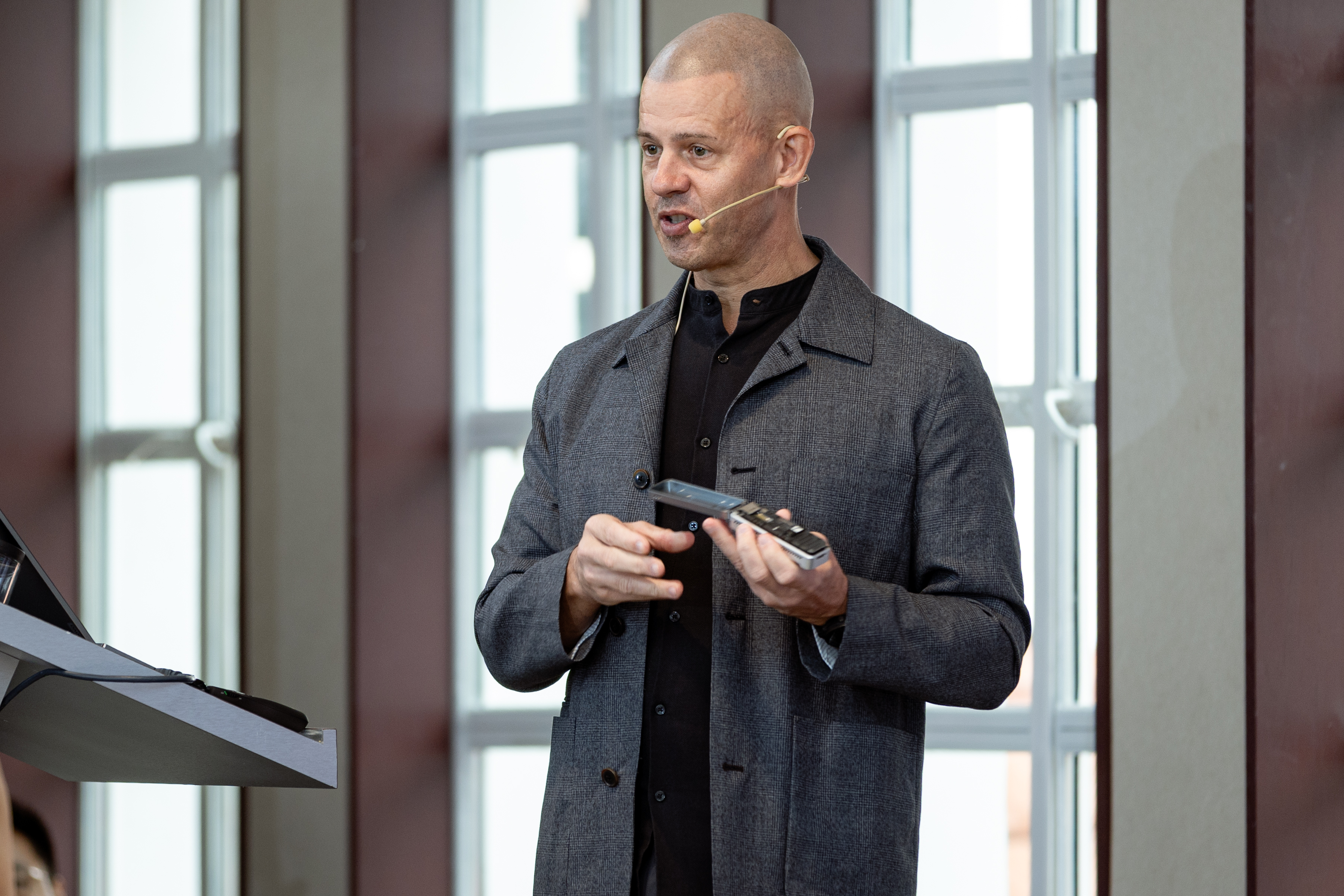
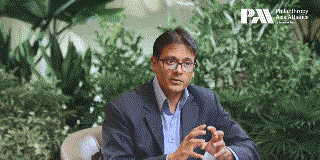
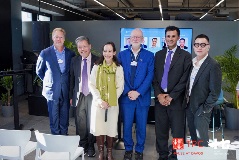
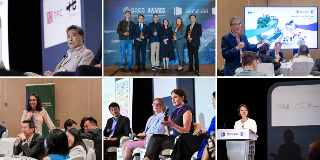
Prof Paul Pronyk explaining the technological advances in infectious disease detection that have culminated in the PathGen initiative. More than 150 attendees, comprising senior health officials from the region, as well as philanthropic, scientific and technology partners, attended the preview held at Temasek Shophouse. Image credit: Temasek Foundation, Duke-NUS COP
1. What is PathGen – why does it matter, and what are its most innovative elements?
PathGen is an Asia-led, sovereign-by-design platform for secure, decentralised pathogen intelligence-sharing across borders. Built to break data silos and accelerate the path from early detection to action, it supports public health practitioners, clinicians, and industry teams in identifying emerging disease threats earlier, assessing risks faster, and coordinating responses within and across borders.
PathGen’s most innovative elements include:
• Sovereign-by-design architecture that preserves national ownership of sensitive data while enabling meaningful cross-border intelligence-sharing.
• A decentralised model that improves situational awareness without centralising sensitive datasets.
• A focus on “time to actionable insight”, streamlining the path from detection to decision-making so that control measures can be implemented faster.
• Role-specific utility that ensures insights translate directly into coordinated action by different frontline teams.
2. Your work deals with some of the deadliest diseases in under-resourced parts of the world. What is your dream scenario for PathGen’s impact on people?
In public health, data drives decision-making – yet information often arrives too slowly, remains fragmented, or fails to reach the people who need it most. Innovations in diagnostics and technology have radically transformed what is possible, and we need to take advantage of this.
Early in my career, I was working to understand the growing burden of tuberculosis in South Africa. This was back in 1998, after apartheid ended and just as HIV/AIDS was coming onto the scene. We knew that TB cases presenting in hospitals were likely a massive under reflection of the real picture. But all we had were hand drawn maps and sputum containers. It took a team of 25 people and a year of household visits to learn what was going on. We gathered sputum samples from chronic coughers across 10,000 households, interviewed families where there had been suspicious deaths to see if TB was a cause, and spoke with hospital patients about their care journey. In the end, we learned that the health system missed about 1/3 of cases. This helped us develop better interventions – but at a snails’ pace and at great cost.
Today, we have cooler tools – genomic sequencers, GPS mapping and powerful processors, yet information gaps persist. Genomic insights still do not reach decision makers quickly enough. Data remains siloed within and between countries for political, privacy, and commercial reasons. Genomics is often treated as sensitive health data – or as the ‘new oil’ – so it does not move where it needs to, when it needs to.
PathGen is not a panacea, but it aims to close these gaps by bringing together two of the most powerful innovations in recent decades – genomics and AI – to deliver earlier, more actionable intelligence.
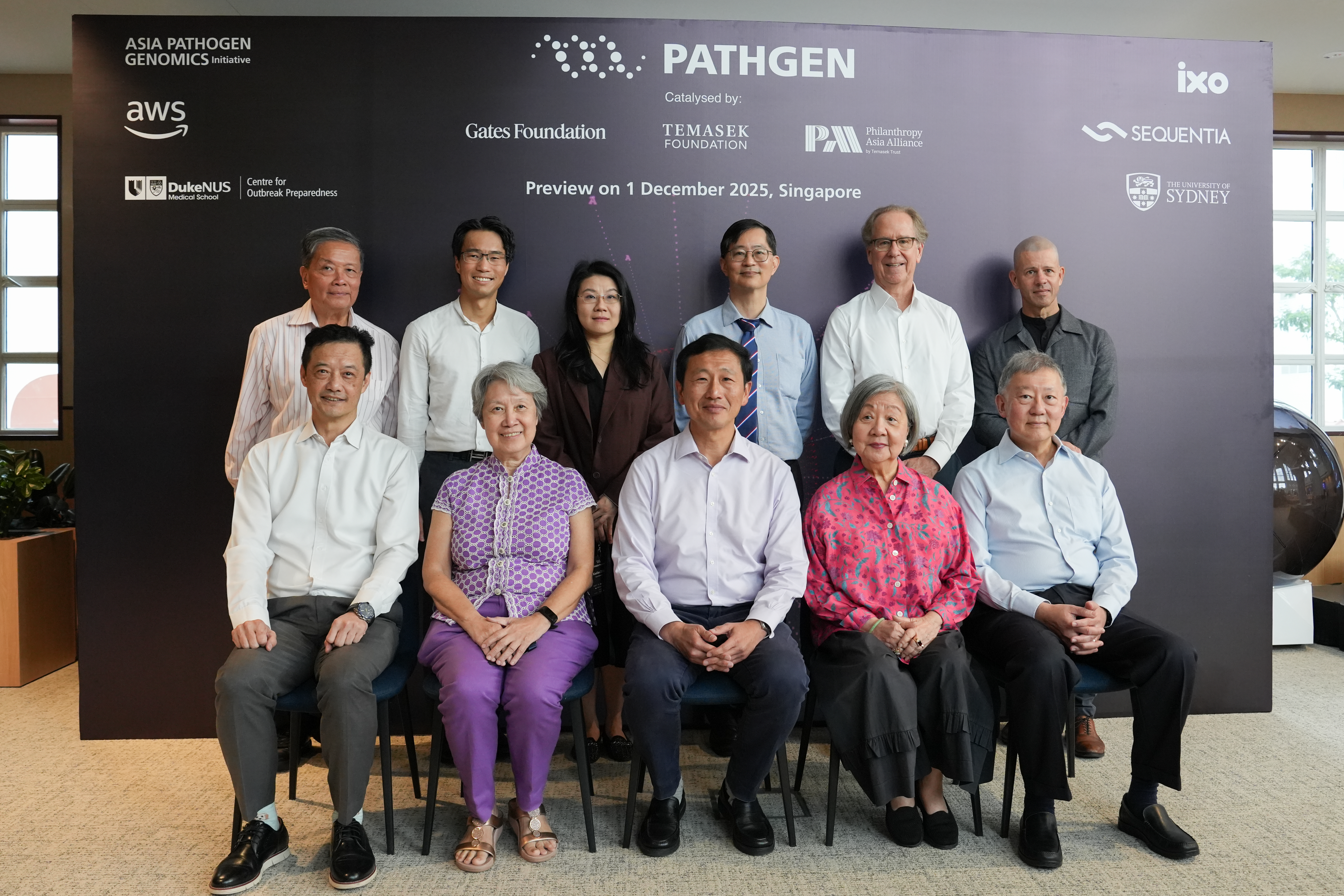
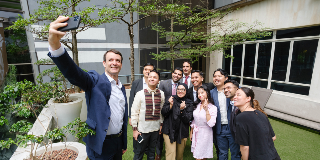
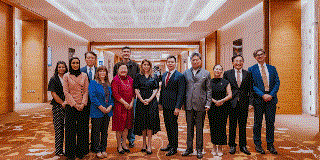
[From left] Seated: Mr Ng Boon Heong, Executive Director & Chief Executive Officer, Temasek Foundation; Ms Ho Ching, Chairman, Temasek Trust; Mr Ong Ye Kung, Minister for Health and Coordinating Minister for Social Policies; Ms Jennie Chua, Chairman, Temasek Foundation; Mr Goh Yew Lin, Chair, Governing Board, Duke-NUS Medical School.
Standing: Dr Lee Fook Kay, Head, Pandemic Preparedness, Temasek Foundation; Prof Vernon Lee, Chief Executive, Communicable Diseases Agency; Ms Zeng Xiaofan, Senior Program Officer, Gates Foundation; Prof Patrick Tan, Dean-designate, and Prof Thomas Coffman, Dean, Duke-NUS Medical School; Prof Paul Pronyk, Director, Duke-NUS Centre for Outbreak Preparedness at the preview of PathGen. Image credit: Temasek Foundation, Duke-NUS COP
3. What are key challenges that you encounter, and how can the Duke-NUS Centre for Outbreak Preparedness address them?
Since COVID, our region has made substantial progress in advancing capacity for early disease detection – using a range of tools including genomic surveillance. When coupled with other sources of information, these can provide powerful insights to help us understand what’s happening and how to best respond.
However, much of this information remains specialised and siloed – and isn’t coming together optimally to inform public health decision making. In the case of genomics, countries have legitimate concerns about sharing sensitive health data, and the political or economic repercussions from outbreak reporting. This is compounded by questions of sovereignty related to the research and commercial value of genomic information and longstanding inequities in how benefits are distributed.
PathGen addresses these issues through three core technical innovations:
• Genomic embeddings that convert sequences into non-reversible mathematical representations that retain biological meaning without exposing raw data.
• An AI-enabled intelligence layer that integrates genomic, epidemiological, and contextual indicators into intuitive, policy-relevant dashboards.
• Federated analysis which brings the analytical tools to nationally controlled servers rather than sending data outward, allowing countries to collaborate without compromising sovereignty.
The Duke-NUS COP, which hosts the Asia PGI, can advance this work because of its trusted partnerships with regional governments and academic institutions. PathGen grew out of these relationships, combining practical understanding of country-level challenges with the latest scientific advancements.
4. Looking ahead, what does meaningful scale look like for PathGen?
Meaningful scale means evolving from a pilot platform co-created with our early partners into a trusted tool that countries across the region use to inform public health decisions. This requires deep country-level engagements to clarify priority use cases – such as tuberculosis drug-resistance, arboviral outbreak detection, antimicrobial resistance, and wastewater surveillance.
Technical development is also underway to meet security, privacy, and data-residency needs, alongside governance and benefit-sharing frameworks that uphold sovereignty, ensure reciprocity, and give users full control over how their data is used.
Longer term priorities include sustained capacity building so national laboratories and teams can translate genomic insights directly into decision-making. Our goal is a trusted network of countries that maintain ownership of their data, participate on equitable terms, and collectively generate early, actionable intelligence that strengthens health protection for their communities.
To learn more about PathGen, visit https://pathgen.ai/or reach out to your PAA point-of-contact to connect with Duke-NUS COP.
👉 Stay updated — subscribe to our PAA Pulse newsletter and follow us on LinkedIn.









.tmb-.gif?Culture=en&sfvrsn=e13997ec_1)
.tmb-.gif?Culture=en&sfvrsn=b5ece239_1)
.tmb-.gif?Culture=en&sfvrsn=6fb3b6df_1)
.tmb-.png?Culture=en&sfvrsn=7fea9931_1)
.tmb-.gif?Culture=en&sfvrsn=3f4b1163_1)

.tmb-.jpg?Culture=en&sfvrsn=fedc60fc_1)