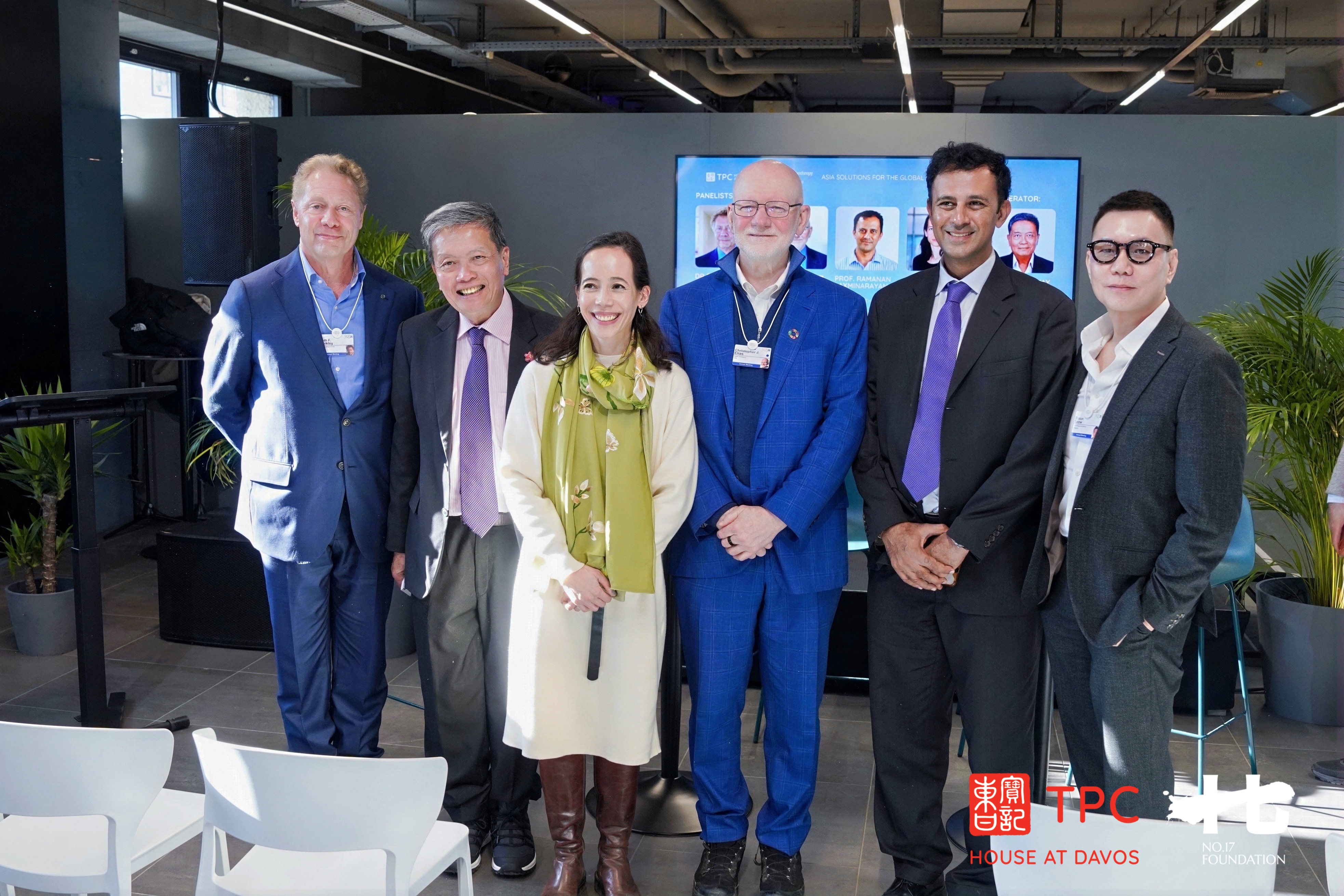
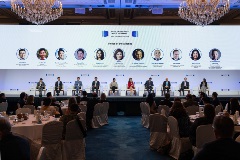
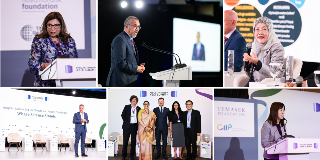
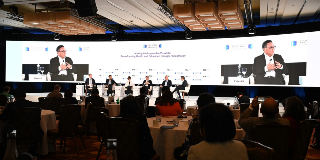
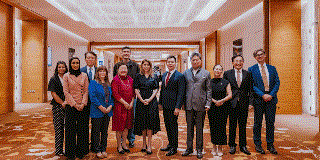
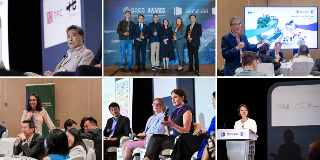
L-R: Dr Seth F. Berkley, Chief Strategic Technical Officer at Serum Institute of India; Dr Lee Fook Kay, Head of Pandemic Preparedness at Temasek Foundation (Moderator); Ms Aurélia Nguyen, Deputy CEO of the Coalition for Epidemic Preparedness Innovations (CEPI); Dr Christopher J. Elias, President of Global Development at the Gates Foundation; Professor Ramanan Laxminarayan, President of the One Health Trust; Mr Shaun Seow, CEO, Philanthropy Asia Alliance (Photos: The TPC House)
Mosquitoes may be small, but the risks they carry are anything but.
As climate change accelerates, urbanisation intensifies, and global mobility rebounds, mosquito-borne diseases are spreading faster and further than before. Dengue, malaria, chikungunya, and other vector-borne diseases are no longer confined to the tropics or treated as seasonal public health concerns. They are becoming a shared global vulnerability – intersecting health systems, climate resilience, economic stability, and social trust.
During the World Economic Forum Annual Meeting 2026 in Davos, Switzerland, the Philanthropy Asia Alliance (PAA) convened a panel on “Asia’s Solutions for the Global Mozzie Challenge” to explore how Asia’s lived experience can help shape a more coordinated global response.
“Asia sits at the front line of these challenges,” said PAA CEO Shaun Seow in his opening remarks. “The region carries a heavy burden of mosquito-borne diseases – but it also offers deep experience in solving them. The problem is that too many of these efforts are still in silos.”
A shifting risk landscape
Moderated by Dr Lee Fook Kay, Head of Pandemic Preparedness at Temasek Foundation, the panel highlighted how the mosquito challenge is intensifying across Asia. From chikungunya outbreaks in southern China to rising cases of zoonotic malaria in Malaysia, the region is facing a more complex and dynamic disease environment shaped by climate change, land-use shifts, and human mobility.
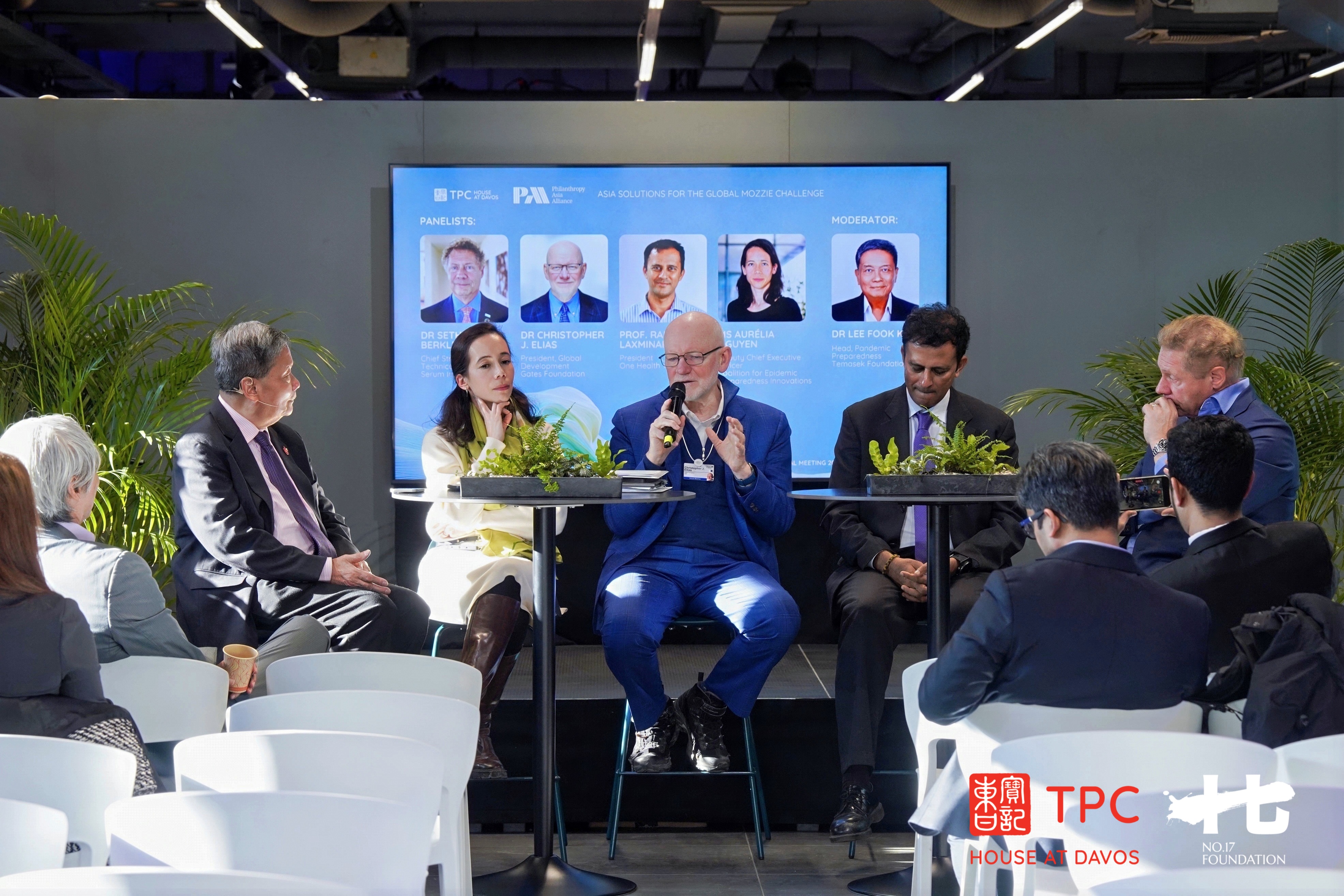
“Climate change has already made dengue much worse,” noted Dr Christopher J. Elias, President of Global Development at the Gates Foundation. “We’re seeing it in places where we never saw it before.”
But the challenge is not only where mosquito-borne diseases are spreading – it is also how they are persisting. “We are seeing asymptomatic malaria, where individuals may not realise they are infected, yet remain capable of transmitting the disease,” said Dr Lee.
These trends point to a sobering reality: preparedness is no longer just about responding once outbreaks occur. It is about anticipating risk – and acting early.
Surveillance buys time, and time saves lives
A central theme of the discussion was surveillance as the foundation of prevention.
“When you have good surveillance, it buys you time – and time is the most precious thing you can have during an outbreak,” said Ms Aurélia Nguyen, Deputy CEO of the Coalition for Epidemic Preparedness Innovations (CEPI).
Early detection enables faster intervention, lowers costs, and informs smarter decisions – from resource deployment to vaccine development. Better surveillance data, panellists noted, can fundamentally change the economics of prevention by revealing the true scale and trajectory of disease burden.
Building on the importance of surveillance, several speakers emphasised the need to move beyond siloed, human-only systems toward integrated One Health approaches that combine epidemiological, entomological, genomic, animal, and environmental data.
“Traditional surveillance systems were built for a different era. That era is coming to an end,” said Professor Ramanan Laxminarayan, President of the One Health Trust, underscoring the need for surveillance systems that can integrate data across human, animal, and environmental domains – and translate early signals into timely action.
Emerging approaches, such as wastewater monitoring, illustrate how environmental data can complement clinical surveillance by detecting outbreaks weeks before cases spike – but only if countries share data and link signals to action.
Innovation must be matched with coordination and trust
The panel also examined advances in vector control, including Wolbachia-based strategies and emerging gene-based approaches. While promising, panellists were clear that innovation alone is not enough.
Different vector control strategies can undermine one another if deployed without coordination, while public concern and misinformation can derail even well-designed programmes.
“The only thing that spreads faster than vector-borne diseases is misinformation,” said Dr Elias. Building trust, engaging communities, and taking step-by-step approaches are essential, particularly for newer technologies.
This reinforced the importance of People as the missing fourth ‘P’ in coordinated action. Effective responses require public, private, and philanthropic actors working together, with communities at the centre to ensure adoption and behavioural change.
Vaccines, markets, and the challenge of scale
.png?sfvrsn=759a83ec_1)
Vaccines and therapeutics remain critical tools, but panellists were candid about existing gaps. Dengue’s multiple serotypes, evolving resistance, and weak commercial incentives have slowed progress, while several promising antivirals have stalled due to insufficient demand.
“If there is no market, vaccines don’t move forward. That’s the hard truth,” said Dr Seth F. Berkley, former CEO of Gavi and Chief Strategic Technical Officer at Serum Institute of India. Scale, he stressed, is key – not only to reduce costs, but to make innovation viable.
Introducing the Global Consortium Against Mosquito-Borne Diseases: A platform for collective action
To address fragmentation across surveillance, vector control, and R&D, the panel introduced the Global Consortium Against Mosquito-Borne Diseases (GCAM) – a proposed platform jointly led by PAA, Temasek Foundation, and Temasek Life Sciences Laboratory.
GCAM is envisioned as a catalytic platform to align funders, governments, research institutions, and innovators to translate science into impact at scale — strengthening surveillance, coordinating vector control strategies, accelerating next-generation tools, and keeping people at the centre.
A call to act, together

Mosquito-borne diseases are often underestimated precisely because they are familiar. But as the panel discussion made clear, familiarity should not breed complacency.
Climate change is reshaping risk faster than systems are adapting. Fragmented responses are no longer sufficient. What is needed now is collective foresight, coordination, and commitment – across borders, sectors, and disciplines.
📄 View excerpts from our white paper on GCAM and the case for a coordinated platform.
🤝 Reach out to contact@philanthropyasiaalliance.org to express interest in joining GCAM.




.tmb-.png?Culture=en&sfvrsn=7fea9931_1)
.tmb-.gif?Culture=en&sfvrsn=e13997ec_1)


.tmb-.gif?Culture=en&sfvrsn=3f4b1163_1)




.tmb-.gif?Culture=en&sfvrsn=b5ece239_1)
.tmb-.gif?Culture=en&sfvrsn=6fb3b6df_1)


.tmb-.jpg?Culture=en&sfvrsn=fedc60fc_1)